What can you do instead of scrolling?
When you put down the phone, the first thing you may notice is not relief. It is an empty minute.
The line is still slow. The kettle is still warming. The couch is still there at the end of a long day, and now your hands have lost their most familiar assignment. “Scroll less” does not tell them what to do next.
You do not need a digital detox, a thirty-day challenge, or a new productive identity. You need one small alternative that fits the moment. Read one page. Make one mark. Notice one thing. Write one line. Sit quietly for a little while.
Here are ten things to do instead of scrolling that can begin small and stay small.
1. Read one page
Choose a book, essay, poem, comic, or magazine that is already easy to reach. Read one page without requiring yourself to continue.
One paper page gives your eyes and hands a clear place to begin. If the page catches you, keep going. If it does not, place a marker and stop.
If reading has felt hard to return to, the article on how to start reading again offers a gentler doorway. The Cozy Reader guide keeps the full reading-bag details separate.
2. Write three ordinary lines
Open a notebook or use a scrap of paper. Write three lines about what is directly in front of you.
They can be plain:
- The mug is still warm.
- I can hear a car turning the corner.
- I do not know what I want to do next.
This is not a gratitude practice or a demand for deep reflection. It is ink, paper, and one honest sentence at a time.
If a formal diary does not appeal to you, what to write in a notebook offers other page forms.
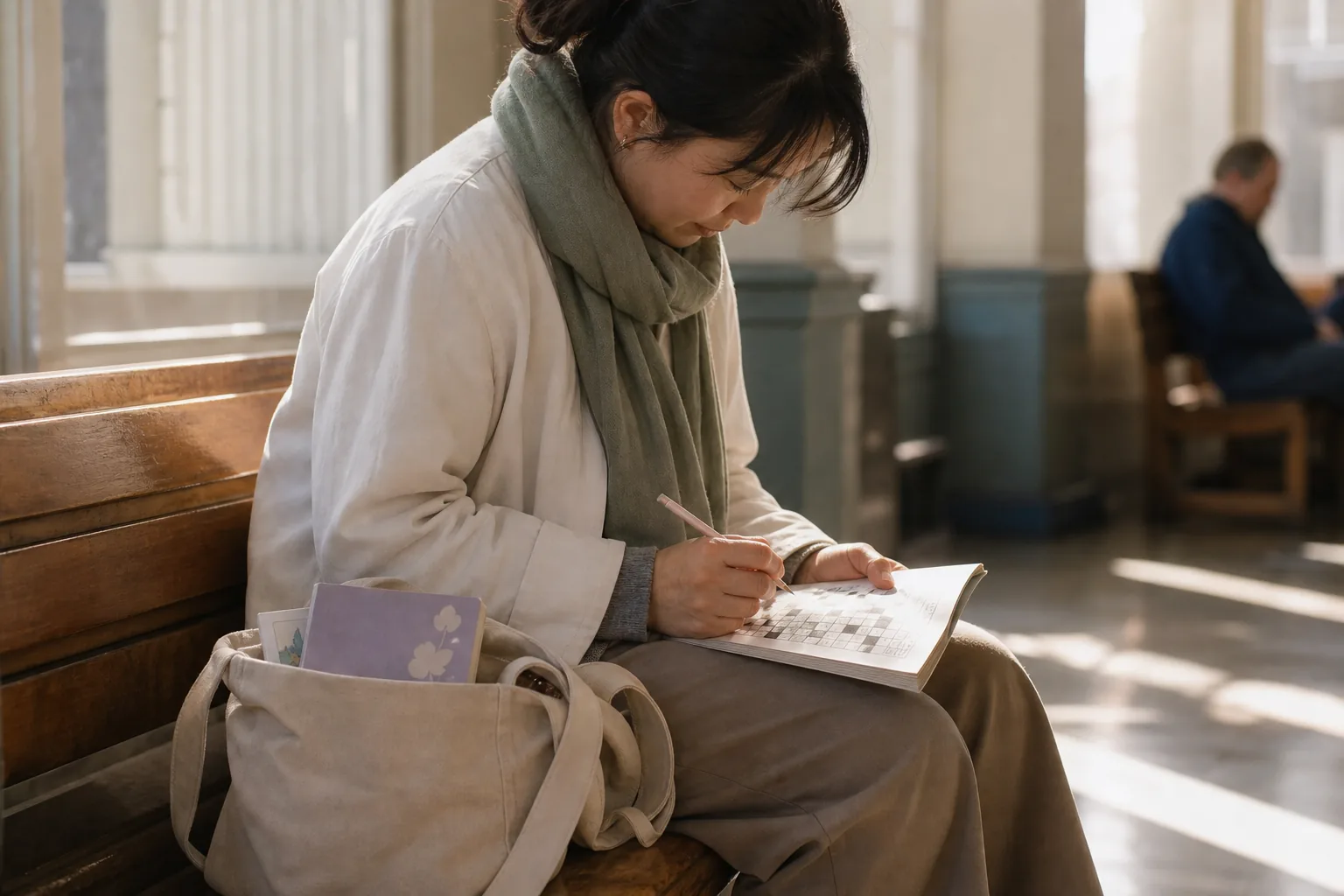
3. Solve one small paper puzzle
Try one crossword clue, one word search line, one maze, one number square, or one physical brain teaser. Stop after one small unit.
A bounded puzzle gives the moment a clear edge. There is a beginning you can see, something specific to notice, and a natural place to pause. It does not need to become a daily practice.
Keep the puzzle size honest for the moment. A two-minute wait and a rainy afternoon want different things.
4. Color one shape
Choose one shape on a coloring page, make five lines, or fill a small square with color. The good kind of crayon is welcome, but whatever is already nearby can do the job.
You are not making a finished piece. You are giving your hands a simple, visible task.
If a blank page makes starting harder, explore low-pressure creative hobbies with clear edges. The Diamond Artist guide holds the related bag contents.
For a more complete indoor setup meant to move from shelf to table, visit the Rainy-Day Creative Reset Bag guide.
5. Notice five specific things
Look around and find:
- one soft edge;
- one repeating pattern;
- one tiny source of light;
- one sign that another person has been here; and
- one color you had not noticed.
Observation counts as an activity. You do not have to photograph what you see or turn it into content. The odd reflection on a spoon can remain a private pocket-sized wonder.
This option travels well because it requires no supplies. It can fill a line, a waiting room, or the minute before someone arrives.
6. Sort one small handful
Choose a contained group of objects and arrange them for a few minutes. You might sort postcards by color, buttons by size, a handful of photos by year, or game pieces before the next round.
Keep the scale small enough to finish or return easily. The goal is not to reorganize a room. It is to let the hands notice shape, texture, sequence, and difference.
When the handful is sorted, you can mix it up, put it away, or leave the arrangement for later.
7. Make a tiny list that is not a task list
Write five books with beautiful covers. Name three snacks you loved as a child. List every blue object in the room. Invent titles for imaginary boats.
A list can hold curiosity without becoming a plan.
If your mind tries to turn the page into errands, let those wait. This list has no next actions hiding inside it.
8. Send or prepare one small note
Write one sentence to someone you care about. It can become a card, a note left on the counter, or a message you type later.
You might write:
- I saw this and thought of you.
- Thank you for the thing you did yesterday.
- I would like to hear how your week is going.
The note does not have to be eloquent. A small piece of paper can hold a real point of connection.
If sending it now creates pressure, leave it unsent. The writing can still be the whole activity.
9. Ask one person one real question
If someone is nearby and open to talking, ask a question that fits the relationship and the room.
Try something light:
- What was the best thing you ate this week?
- What ordinary object do you wish were better designed?
- Which fictional place would you visit for one afternoon?
Give the other person room to decline. Shared offline time works best as an invitation, not a surprise interview.
For waits and in-between moments, explore things to do while waiting without your phone or the Whimsical Wanderer guide.
10. Do nothing for two minutes
Put the phone down and let the minute remain unfilled.
You might look out a window, sit with your eyes closed if the setting is safe, feel your feet inside your shoes, or listen to the ordinary sounds in the room. You do not need to breathe in a special pattern. You do not need to produce an insight.
Doing nothing is not a failed hobby. Sometimes the kindest offline choice is no additional input at all.
If even the list above feels like too much, this is the option that asks the least.
Why can replacement feel easier than removal?
“Do not scroll” leaves a blank instruction. The hand reaches for the familiar object, and there may be no visible answer to “what now?”
A prepared replacement gives the moment a shape. It does not have to be more exciting than the phone. It only needs to be close enough, clear enough, and small enough to begin.
This is where an Analog Bag can help. The container keeps one or two offline possibilities visible and together. It does not have to hold a hobby store. A paperback and a bookmark can be a complete answer for one recurring moment.
If you are new to the category, read what an Analog Bag is. If you want to assemble one, build an imperfect first version from objects already at home.
If you want help choosing a first kind of offline invitation, the private, no-email Analog Self quiz can offer a pathway without locking you into it.
What can you do in the morning?
Morning scrolling often arrives before the day has a shape. Choose something that does not immediately become a productivity system.
You might:
- look out the window and write down the weather in your own words;
- read one poem while a drink cools;
- stretch a piece of paper across the table and make one loose pattern;
- open the blinds and notice where the first light lands; or
- sit with breakfast without adding another stream of information.
You do not have to replace every morning scroll. Choose one part of the morning, perhaps the first five minutes after the kettle clicks off.
What works while waiting or between activities?
Transitions favor options that can stop cleanly. Observation, one puzzle clue, a tiny list, a pocket-sized book, or one question shared with a companion can fit.
Keep public spaces in mind. Choose something quiet, contained, and easy to set down when the line moves or your name is called. The Analog Travel Reset Kit offers fuller ideas for airports, road trips, and unfamiliar rooms.
You can also let waiting be waiting. Looking around the room is enough.
What can you do at home or at night?
At home, the strongest alternative may be the one already open and ready. Leave the book at the page. Keep the puzzle and pencil together. Put the letter paper where you usually sit.
For an evening pause, you might:
- read a few pages under a comfortable light;
- color one shape;
- write a note;
- complete one small puzzle;
- sort a handful of photographs; or
- sit quietly with a familiar drink.
None of these activities guarantees better sleep, a calmer mind, or a changed health outcome. They are simply screen-free choices you may prefer in that moment.
The Screen-Free Self-Care Starter Bag offers a complete guide for making one gentle option easier to reach.
If the moment wants a little more meaning without becoming a performance, try creating a personal ritual with an object you already own.
Do you need to delete social media apps?
Not to try one offline alternative.
You may decide to change an app, a notification, or where your phone lives. You may also decide not to. This article is not a detox plan, and it does not require an all-or-nothing promise.
Begin with one recurring moment. Prepare one other choice. Notice what actually happens.
If you still choose the phone, that is information, not a moral failure. The offline option may be too hidden, too complicated, or simply not what you want today.
What if you are too tired for a hobby?
Then do not make yourself perform one.
Choose the smallest option on the list, or choose rest. Look at one page without reading it. Hold a familiar object. Sit without adding another task. Put the phone down only for as long as that feels useful.
Offline time does not have to prove its worth through output. Rest can be the whole plan.
For quieter choices organized by setup and available effort, visit Quiet Hobbies for Adults or the Gentle Soul guide.
A gentle next step
Choose one recurring scroll moment and prepare one offline alternative for it. Place the book, paper, puzzle, or familiar object where the phone usually finds you. You can begin with five minutes, one page, one line, or nothing at all.