How do I start reading again?
You may miss reading and still keep choosing the phone at night. The phone is already there. It offers an obvious first move, while a book asks you to choose a title, remember where you stopped, enter someone else’s world, and stay long enough for the door to open.
To start reading again, choose a forgiving re-entry book, make its first page easy to reach, read only as long as the experience feels inviting, and leave yourself a clear point of return. You do not need a reading challenge. You do not need to finish a certain number of pages. You need one book that is easier to reopen than the others.
The weight of a book in your hand and the soft turn of a page may be part of what you miss. Let the return begin there, before it becomes a goal.
Choose a re-entry book, not an aspirational book
An aspirational book belongs to the person you think you should be: the person who reads every classic, understands every complicated family tree, and never loses the plot after putting a book down for three days.
A re-entry book belongs to you tonight.
It might be:
- a book you once loved and no longer have to prove you can finish;
- a familiar genre with an opening that moves quickly;
- a novella, short-story collection, essay collection, or book of poems;
- a graphic novel or illustrated book;
- a book with short chapters and easy stopping places; or
- the title you keep picking up in a shop, even if it is not the serious one on your list.
The useful book is not necessarily the shortest or easiest by someone else’s standard. It is the one that gives you a recognizable way in. A familiar voice, a vivid first scene, a question you genuinely want answered, or a character you enjoy following can be enough.
You are allowed to choose delight over duty.
Choose a forgiving format and length
Long chapters are not a moral achievement. Neither are tiny ones. Format matters because it changes how easy the book is to enter and leave.
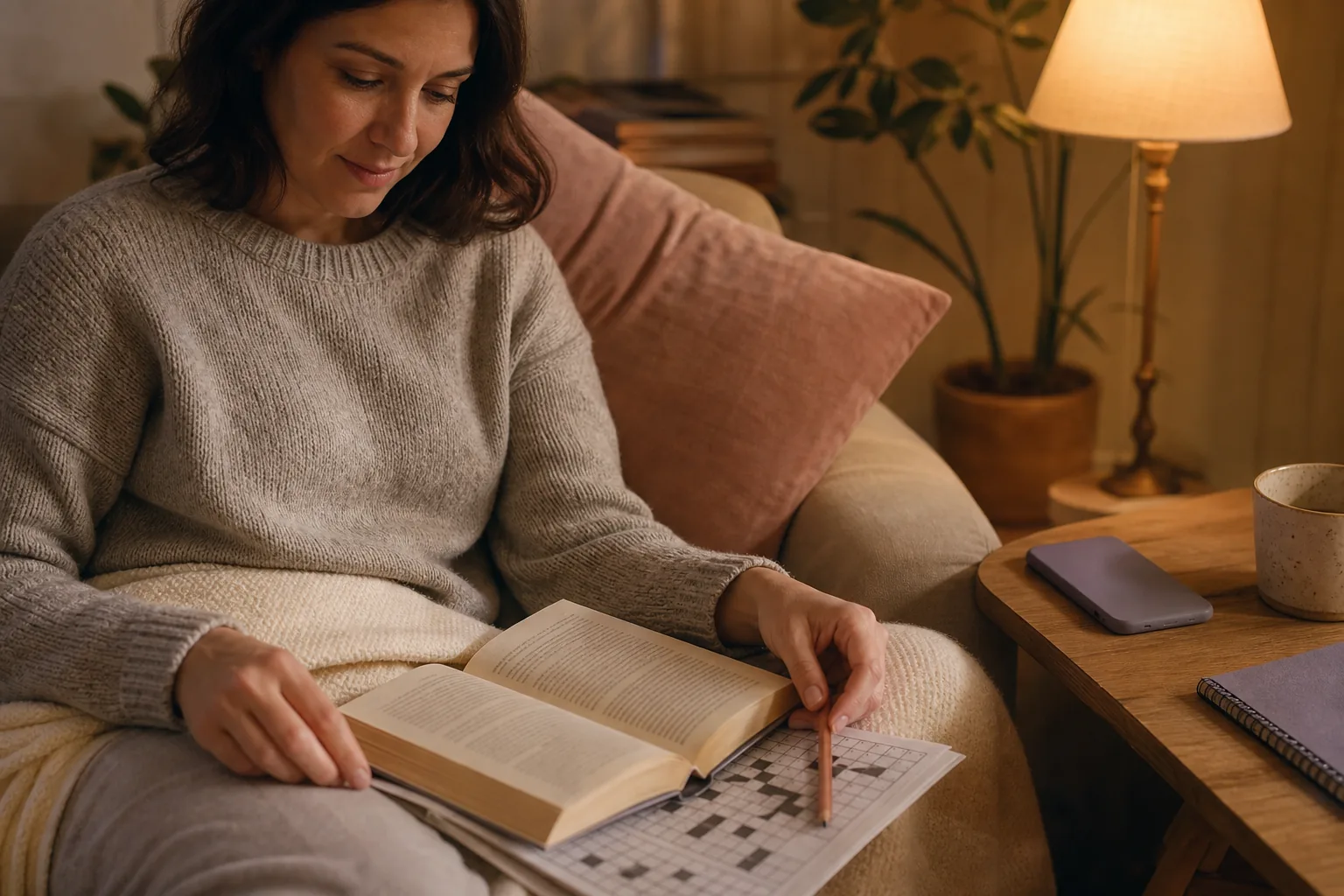
If you have been stopping and starting, look for a form that does not punish interruption. Essays, poems, short stories, comics, illustrated nonfiction, rereads, and books with compact chapters can offer natural pauses. You can finish one small unit and know where to begin next time.
You may also place two different kinds of reading nearby: one story for nights when you want to follow a world, and one short-form book for nights when you want a page or two. This is not indecision. It gives the evening a choice with clear edges.
Try not to build a tower of options. Two books can be an invitation. Twelve can become a committee meeting.
Make the first page easy to reach
The best re-entry book can still disappear beneath mail, blankets, or every other book you mean to read someday. Give this one a visible place near the moment when nighttime scrolling usually begins.
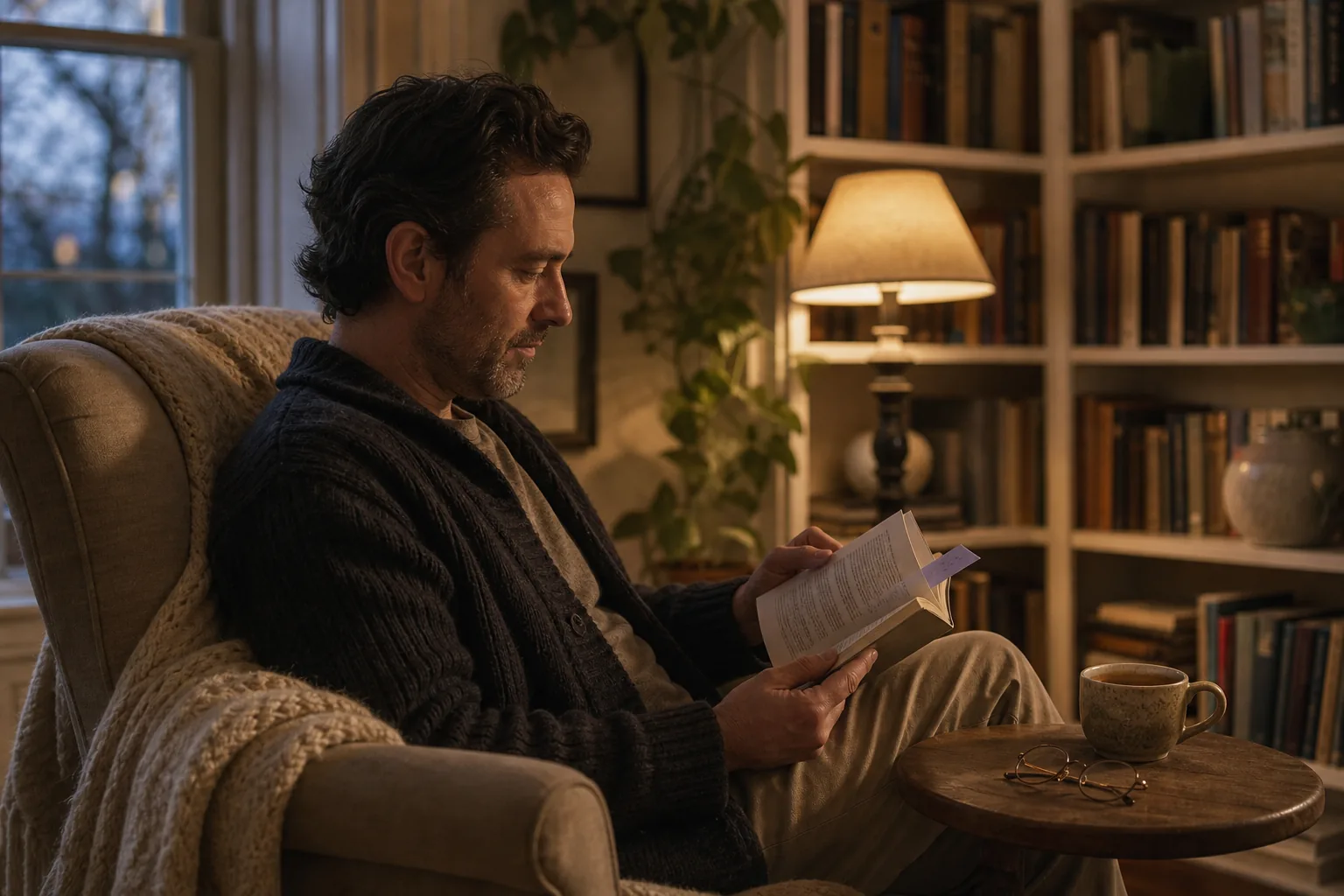
Leave the page marked. If the book is yours and you enjoy doing so, keep it open face-down only when the binding allows it without damage. Otherwise, let a scrap of paper hold your place. The method does not need to be beautiful. It needs to remove the question, “Where was I?”
You might write one short note on the marker:
Next: Mara has just opened the blue door.
That sentence is a small hand extended toward your future self. It saves you from rereading three pages just to remember why anyone is standing in a hallway at midnight.
For a fuller reading-centered bag, the Cozy Reader Bag guide covers the separate question of what can support the ritual. This article stays with the act of returning to the book.
Let a few pages count
Reading for five minutes is reading. One poem is reading. Opening the book, finding that tonight is not the night, and closing it again is still useful information.
Try giving yourself a small permission instead of a minimum:
I may stop after three pages.
You may continue if the story has caught you. You may stop if it has not. The point is to make beginning safe from a surprise assignment.
Page goals can be enjoyable for readers who like tracking. They are not required for a real reading life. If counting turns the page into a unit of performance, leave the numbers alone for now.
Leave a clear point of return
Stopping well can make the next beginning easier.
Before closing the book, notice one thing:
- the question you want answered next;
- the person who just entered the scene;
- the image that stayed with you;
- the argument the writer is beginning to make; or
- the page where the next section starts.
You can hold that detail in mind, pencil one word on a marker, or simply pause long enough to notice it. Then close the book before the stopping point becomes vague.
The next evening, begin with that thread. You do not have to recreate the entire plot. You only need the nearest door.
Should I force myself to finish a book?
No. A book can be well written, beloved by other people, and wrong for you right now.
You might stop because the voice does not invite you in, the subject is not what you want at night, the print is tiring to follow, or the story requires more continuity than your evenings allow. You might return later. You might not.
Abandoning one book can protect the invitation to read another. Put the unfinished title back on the shelf without conducting a trial. Choose a different door.
If you are unsure, try one last small test: open to a chapter that looks interesting and read two pages. If curiosity does not appear, let the book rest.
Is an e-reader still an analog activity?
Strictly speaking, an e-reader is digital, so it is not analog in the literal sense. It may still help someone choose a book instead of a feed, especially when the device is used only for reading and does not invite a trail of notifications and apps.
If your goal is a fully analog activity, choose a printed book, magazine, comic, or zine. If your goal tonight is simply to read instead of scroll, an e-reader may fit your personal boundary.
You do not need to argue yourself into someone else’s definition. Decide what you want less of, what you want more of, and which format makes that choice easier.
What if nighttime is not the right reading time?
The article title names nighttime scrolling because that is a familiar moment, not because reading has to happen before bed.
Perhaps you like ten quiet pages with morning coffee. Perhaps a lunch break, a bus ride, or the half hour before an appointment is easier. The right reading time is the one in which the book has a fair chance of being chosen.
Notice when you already reach for the phone without a specific purpose. Choose one of those moments and place the book there instead. You are not redesigning the whole day. You are giving one ordinary pause another ending.
For more small substitutions across the day, read Things to Do Instead of Scrolling. If the amount of effort available changes from day to day, Quiet Hobbies for Adults offers other screen-free choices without making reading the default.
Build a Cozy Reader doorway, not a reading challenge
A reading doorway has three simple parts:
- One book you want to reopen.
- One visible place where it waits.
- One clear note about where to begin.
That is enough.
You may add more later if those additions make reading feel more inviting. You do not need to create an ideal evening, buy a new shelf, or announce a yearly total. Let the book remain a book.
If you want to explore which Analog Bags pathway fits the way you naturally spend offline time, take the Analog Self quiz. If you want one simple place to keep a chosen activity ready, the Screen-Free Self-Care Starter Bag guide offers a separate starting point.
A small next step
Choose one book that feels easy to reopen. Mark the page, leave it where nighttime scrolling usually begins, and give yourself permission to read three pages or none.
The story can wait without keeping score.