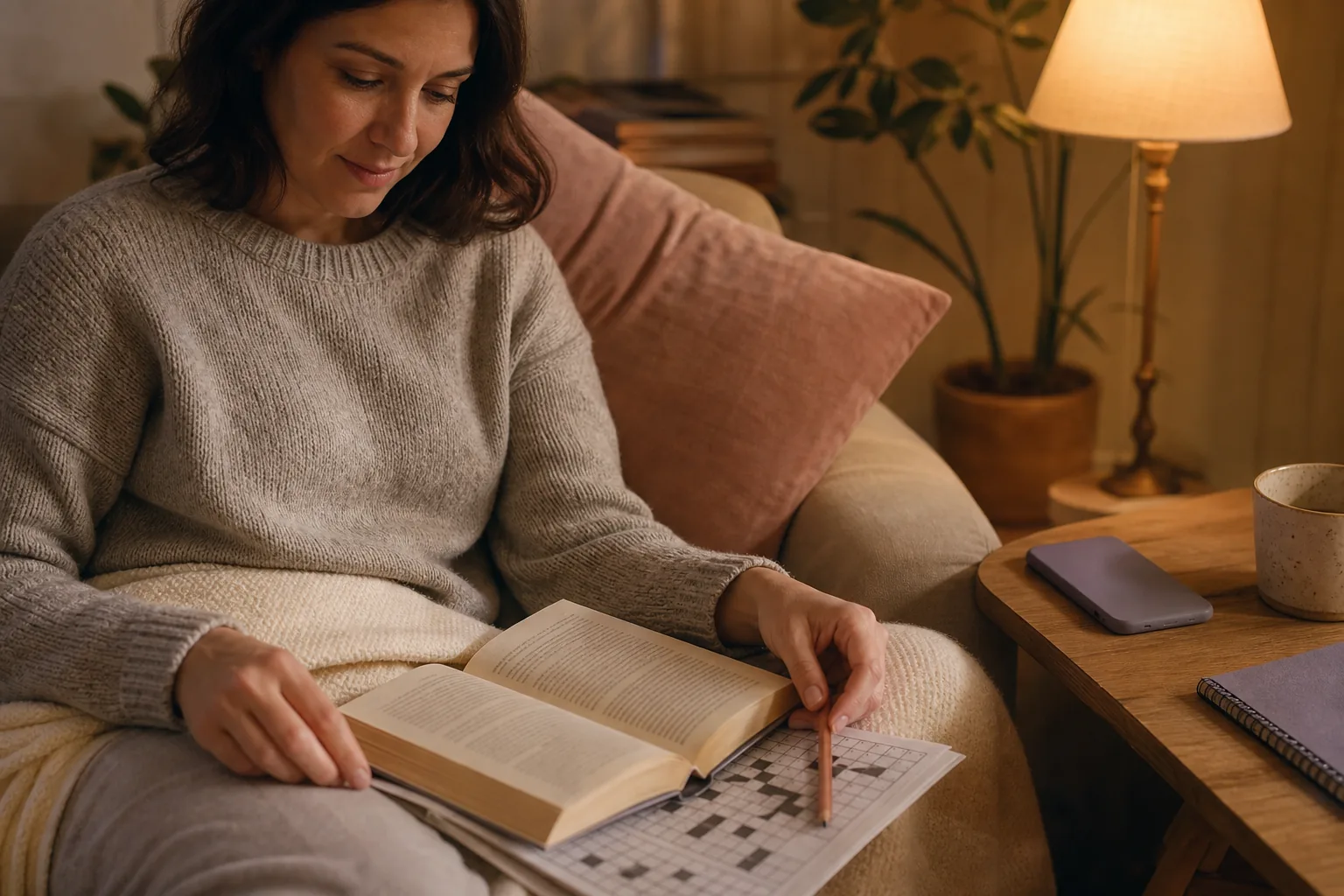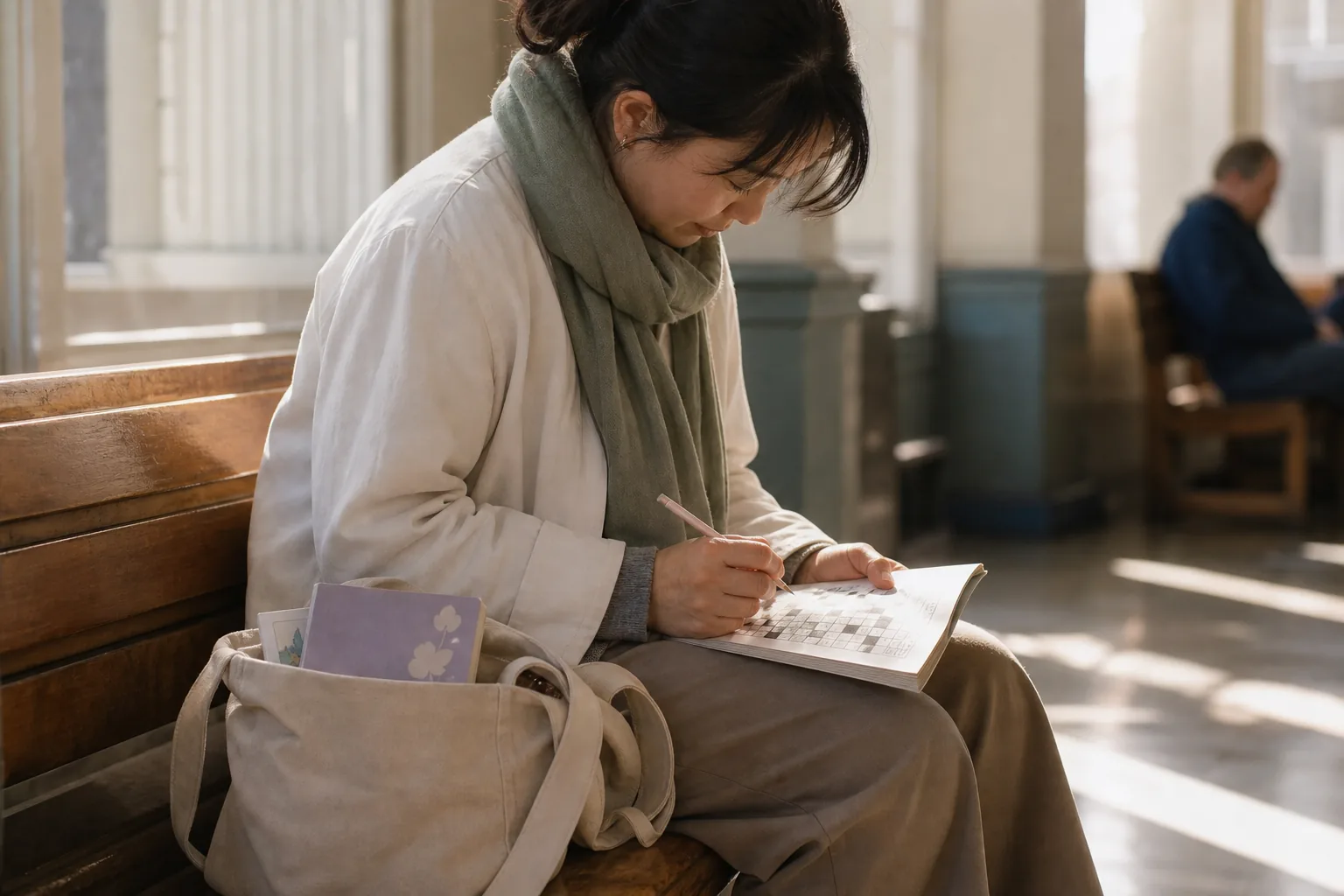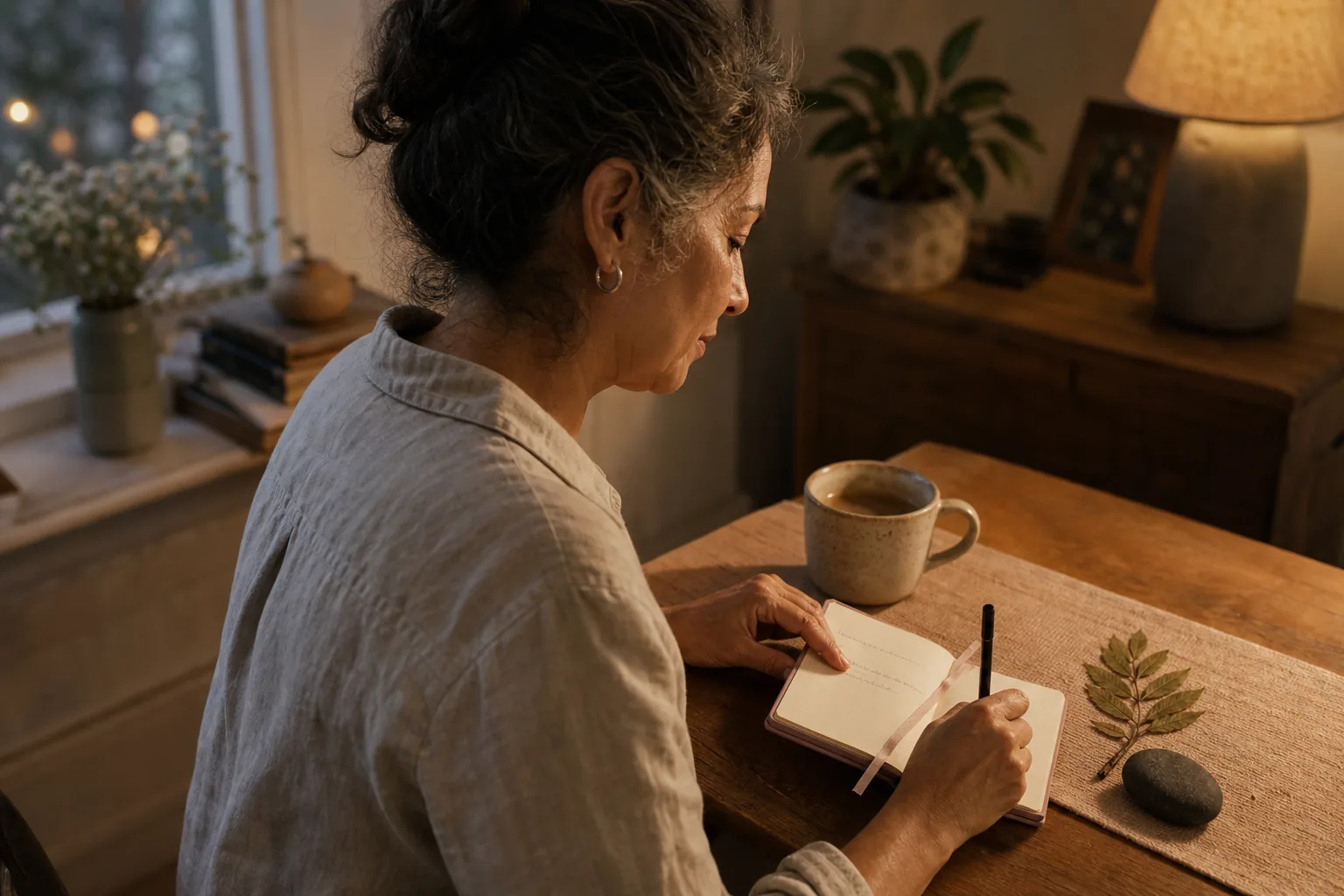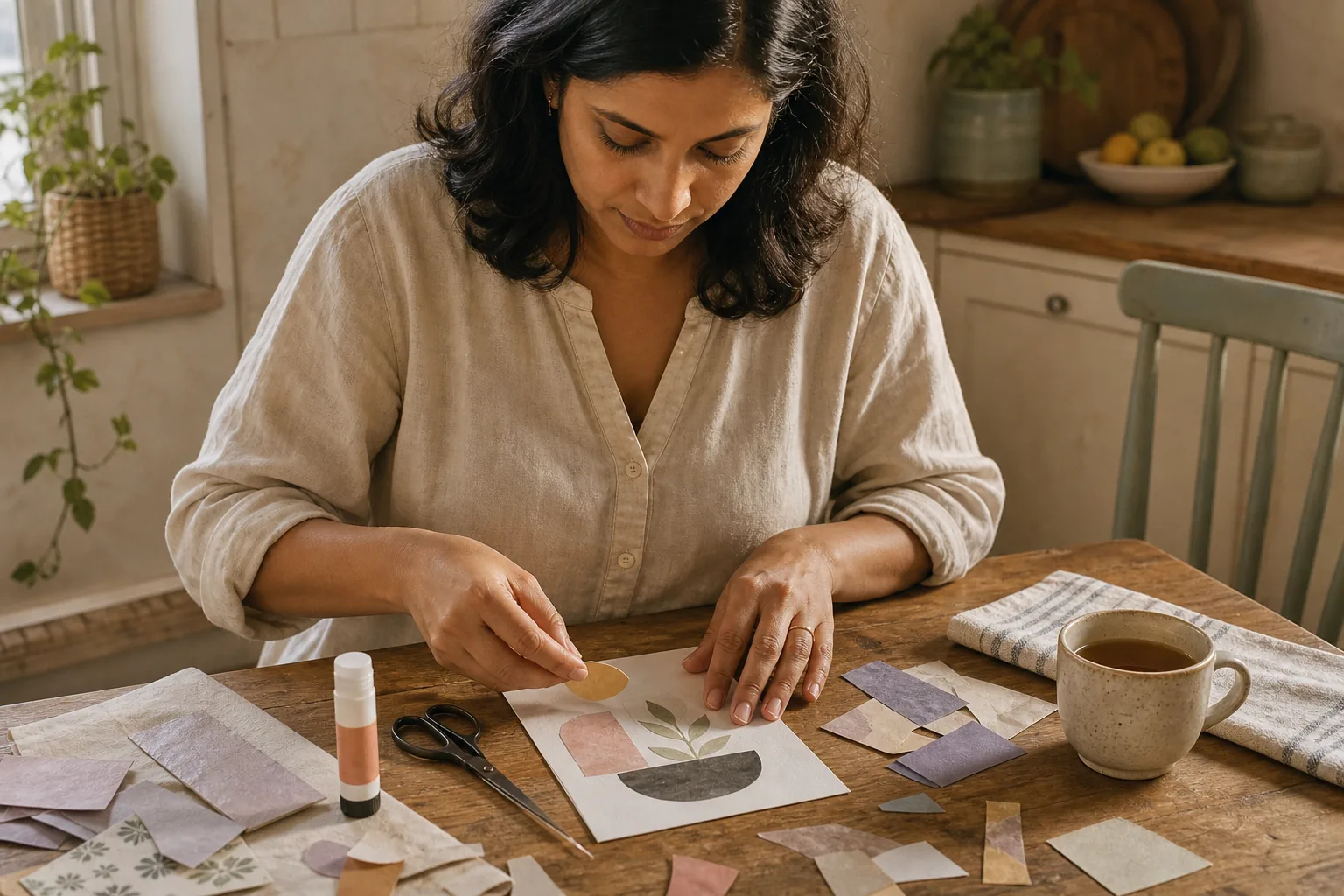
Creativity can begin with an edge
“Make anything you want” sounds generous. It can also leave you standing in front of a blank page while every possible color, subject, shape, and idea asks to be chosen at once.
You do not have to begin with an original idea.
Low-pressure creative hobbies for adults can begin with a format that already has edges: one small square, one repeated shape, one folded page, one pattern to continue, or one object to alter. The boundary gives your hands somewhere specific to start. You can still make choices inside it, but you do not have to invent the whole world before the first mark.
The purpose is not to prove that you are artistic. It is to spend a little time making something tangible, with an easy beginning and an equally easy stopping point.
Why can a blank canvas make starting harder?
A blank canvas does not tell you how large the idea should be, how long it will take, or when it will be finished. If you are already tired of choosing, that openness may feel more demanding than freeing.
A bounded format answers some of those questions in advance. The page is postcard-sized. The shape is already drawn. The activity ends when the row is full. The paper can be recycled when you are done.
This is not about lowering the quality of your work. It is about making the invitation clear enough to accept.
Try replacing “What should I make?” with one smaller question:
- What can I repeat?
- What can I fill?
- What can I arrange?
- What can I copy by hand?
- What can I change using only one shape?
The smaller question gives motion a place to begin.
What if I am not artistic?
You are allowed to make things without calling yourself an artist.
You can enjoy the quiet scratch of a pencil, the soft pressure of folding paper, or the small satisfaction of placing two colors beside each other. None of those experiences requires an audience, a portfolio, or a verdict.
Skill may grow when you repeat an activity, but improvement does not have to be the reason you begin. A creative hobby can be a place to notice color, texture, rhythm, and the work of your own hands. The result may be charming, strange, uneven, or destined for the recycling bin.
You made it. That is the whole fact.
Choose a format with clear edges
A clear edge can be physical, visual, or based on time.
A physical edge
Work inside one small piece of paper, one card, one section of a page, or one object you already planned to mend or decorate. When the space is full, you have a natural place to stop.
Large materials can be divided into smaller territories. Draw six boxes on a page and fill only one. Fold a sheet into quarters and give each section a different pattern. Cover one corner instead of the entire surface.
A visual edge
Begin with something already present:
- a simple outline to fill;
- a printed pattern to continue;
- a photograph to use as a color reference;
- a familiar object to draw from one angle;
- a repeated letter, leaf, circle, or line; or
- a page of scraps to arrange before attaching anything.
Starting from a reference is not cheating. It gives your attention a shape.
A time edge
Set a small window that feels believable. Ten minutes is enough to test an activity. Twenty minutes is enough to find out whether you want ten more.
Time does not need to become a race. The end of the window is permission to pause, not a demand to finish.
Use a deliberately imperfect first exercise
Perfection becomes less persuasive after the first crooked line.
Choose an exercise that cannot reasonably become a masterpiece:
- Draw twenty circles without erasing any.
- Tear five paper shapes and arrange them into a tiny scene.
- Fill one box with lines that never quite touch.
- Copy the pattern on a mug, sock, leaf, or tile.
- Make a two-color version of something usually full of color.
- Create the smallest possible map of an imaginary place.
The first exercise is a warm hello to the material. If it becomes something you like, lovely. If it does not, it has still removed the blankness.
One playful prompt is plenty. A page full of clever instructions can become another thing to perform correctly.
Try repeatable rather than original
Repetition lets each choice grow from the choice before it. One stitch suggests the next stitch. One folded unit joins another. One line becomes a row. You do not have to summon a new concept every few seconds.
Repeatable creative forms might include:
- pattern drawing;
- simple paper folding;
- hand lettering the same word in several shapes;
- arranging and rearranging paper fragments;
- copying a small motif;
- adding visible stitches to an item already marked for repair;
- making a sequence of tiny color studies; or
- building a paper chain, woven strip, or other repeating form.
Choose a version that fits your space, experience, and the materials already available. If an activity requires sharp tools, heat, fumes, tiny pieces, or careful ventilation, it is not a casual choice for every setting. You can choose a simpler version or leave that activity for a properly prepared time and place.
What can I make in ten or twenty minutes?
Look for an activity with almost no setup and a stopping point you can see.
In ten minutes, you might:
- fill one small shape with a pattern;
- arrange scraps into three possible compositions;
- fold one page;
- copy one object using only lines;
- test two color combinations; or
- add a short row to a repeating project.
In twenty minutes, you might continue the version you like, make a second variation, or start again with one changed rule.
The size of the result does not measure the value of the time. A tiny finished square and an unfinished page can both be complete experiences.
Which creative hobbies are easy to pause?
The easiest activities to pause tend to make your place visible.
A row ends. A section fills. A loose arrangement can be photographed or placed in a folder. A thread can be secured. A page can be marked with a small dot where you stopped.
Before beginning, ask:
- Can I put this away in under two minutes?
- Will I know where to restart?
- Does anything need to dry, cool, or be cleaned immediately?
- Will pausing create a safety problem or damage the work?
- Is the setup larger than the time I want to spend?
An activity that is easy to close is easier to welcome on an ordinary day. Complicated cleanup may be worthwhile when you choose it. It simply belongs to a different kind of creative session.
The Diamond Artist guide holds the product and bag-content recommendations for this pathway. The Rainy-Day Creative Reset guide offers a separate approach for a prepared indoor session.
Do I have to finish or keep the result?
No.
You can stop at a natural edge, such as the end of a row, shape, page, or small batch. You can keep one piece, give it away, reuse it, take a photograph, or let the material return to the scrap pile. You do not have to preserve every experiment to prove that the time mattered.
Before you begin, choose one of three endings:
- Keep it if I love it.
- Reuse what I can.
- Let this be practice.
That small decision can keep a low-pressure activity from creating a shelf full of objects you never meant to own.
If you enjoy keeping a record, save one sample rather than every version. Date it only if the date adds meaning. A single square of color or one strange little paper mouse can remember the afternoon.
How can I avoid wasting materials?
Start small and begin with what is already available.
Use the back of a test page. Work from clean paper scraps. Make a sample before committing a larger surface. Arrange pieces before attaching them. Choose one or two colors instead of opening every option.
Waste is not only about material. It can also feel wasteful to spend an hour organizing supplies for ten minutes of making. Keep the invitation lighter than the preparation.
This does not mean every scrap must be saved forever. Decide what is genuinely reusable, then let the rest go according to the material and your local disposal options. A creative space needs room to close as well as room to begin.
Can this be shared without becoming a class?
Yes. Two or more people can use the same small rule and make entirely different answers.
Try a shared prompt such as:
- use only circles;
- make a room for something very small;
- choose two colors;
- continue the same line in your own way; or
- trade unfinished patterns and add one detail.
No one has to demonstrate. No one has to explain what the result means. Quiet parallel making can be enough, and conversation can happen if it wants to.
For a broader list of prepared alternatives to an automatic scroll, visit Things to Do Instead of Scrolling. If you want to make this activity easier to reach again, How to Build Your Own Analog Bag Without Overthinking It offers a simple container-and-cue process without turning the contents into another shopping project.
Build an invitation, not a productivity project
A creative invitation is visible, bounded, and easy to begin. A productivity project comes with output goals, tracking, and a quiet suspicion that you should be doing more.
You may enjoy ambitious creative work. This article is for the other moment: the ten spare minutes, the rainy half hour, the evening when your hands want color but your mind does not want a grand idea.
Choose one format. Leave only that material within reach. Give yourself one small rule. Stop when the motion no longer feels interesting.
Time can pass differently when your hands are building something beautiful. Beautiful, here, may mean one uneven row that exists because you sat down and began.
A gentle next step
Choose one bounded material you already own. Give it ten imperfect minutes inside one clear edge.
When the time is over, decide whether to continue, close it, or let the result go. All three endings count.
If you want to compare this creative pathway with five other ways to spend time offline, take the Analog Self quiz.