What is an Analog Bag?
When every spare minute seems to end with a phone in your hand, it can be surprisingly hard to picture another option. You may want less scrolling without wanting a challenge, a new rule, or an ambitious hobby. You may simply want something else to reach for.
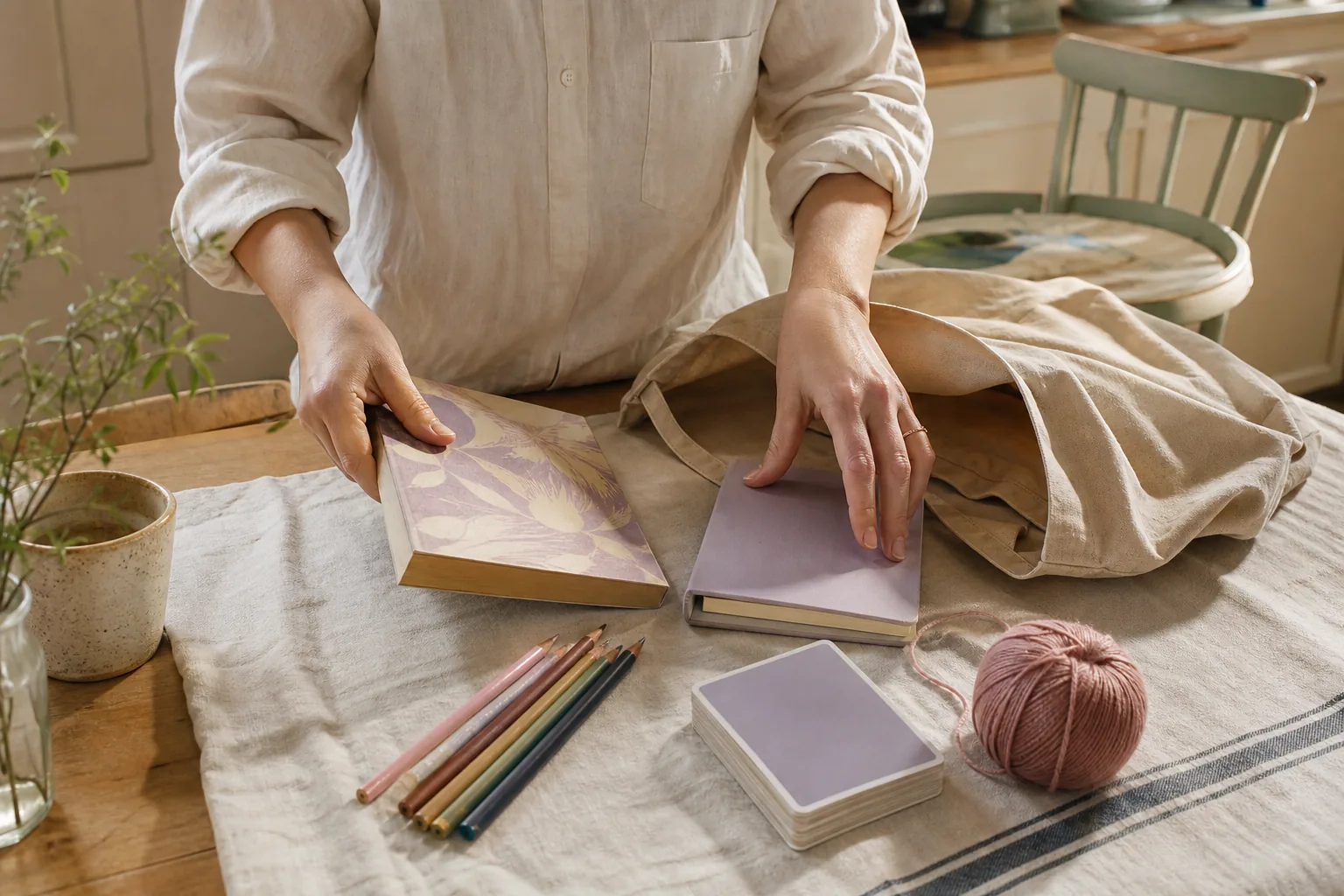
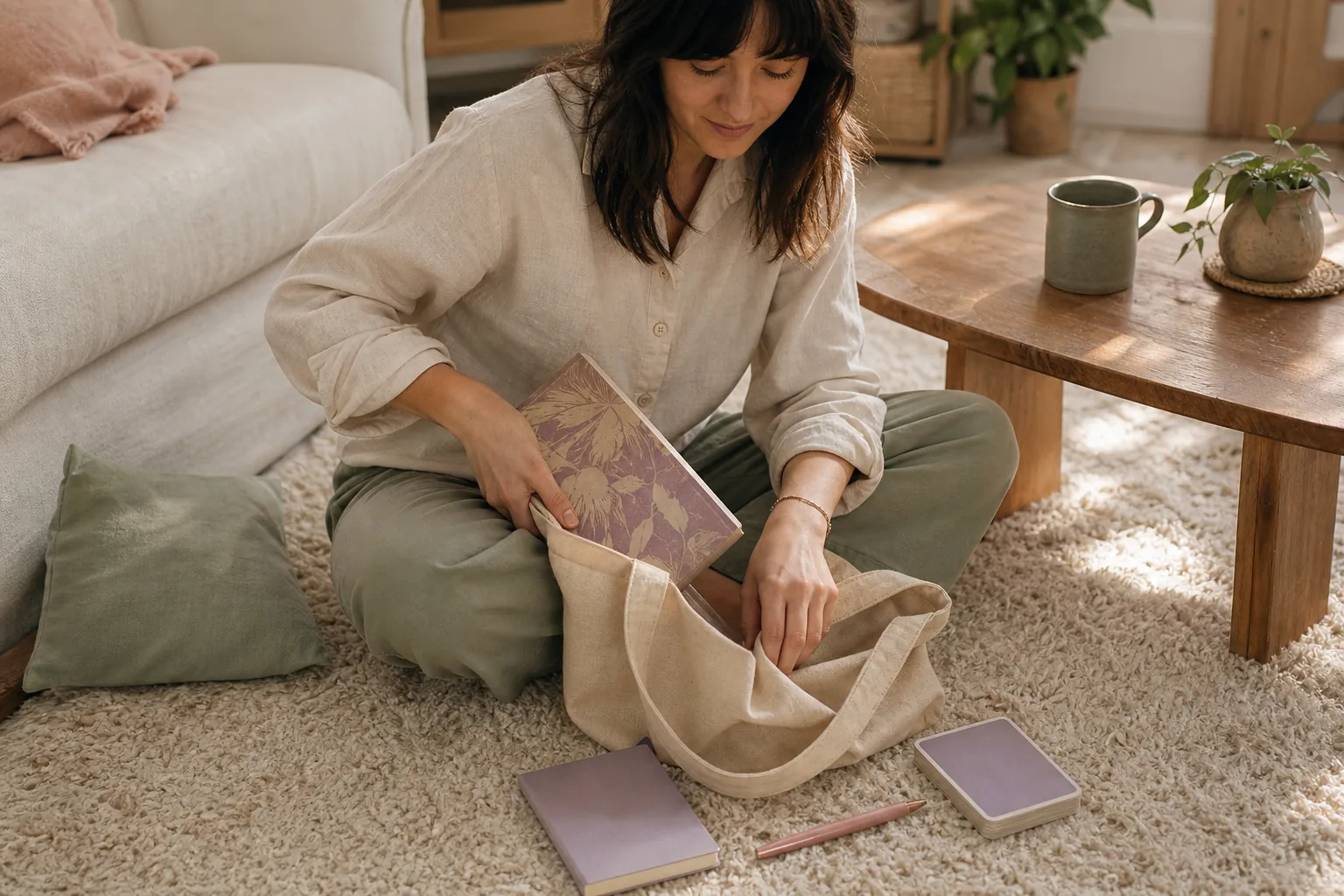
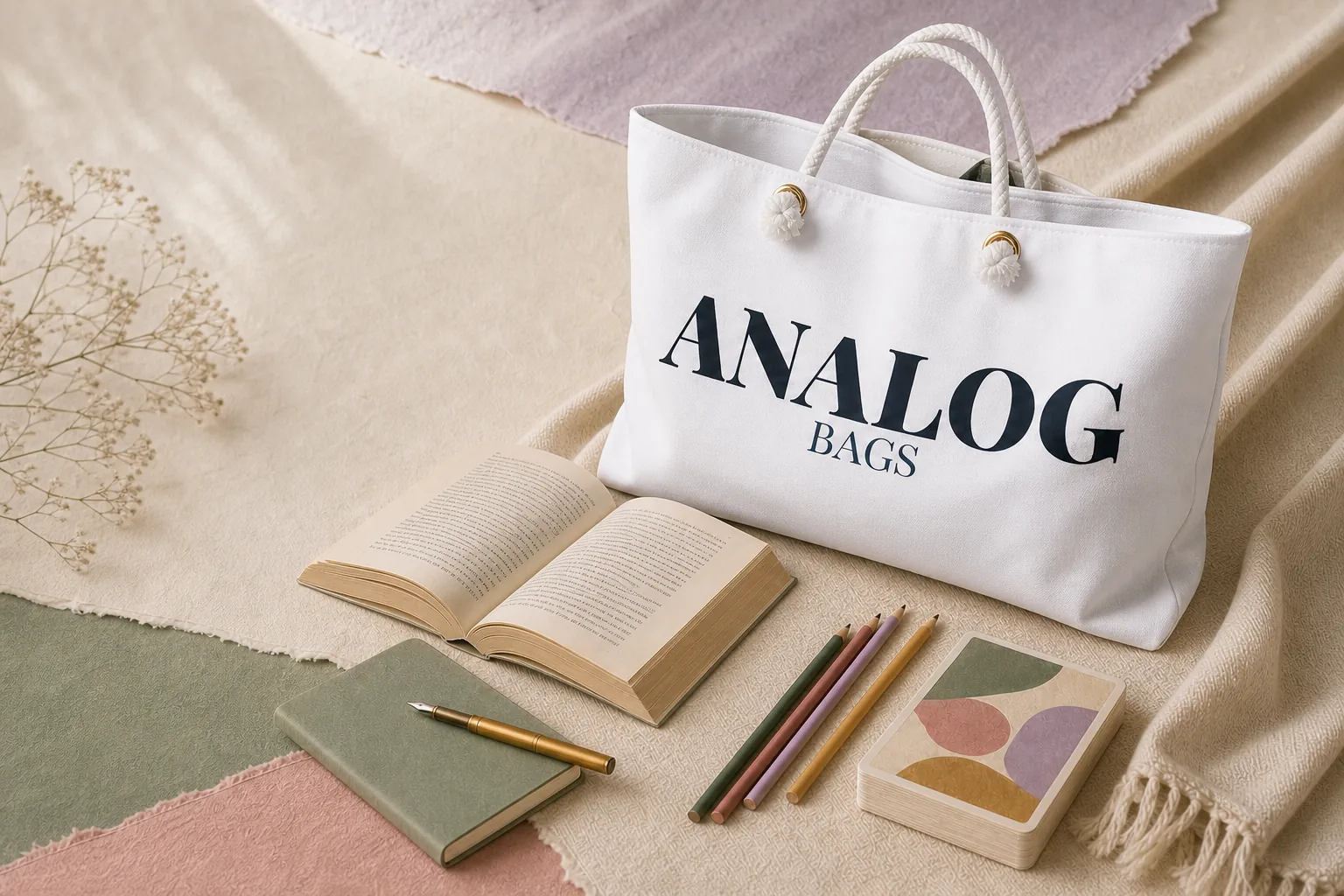
An Analog Bag is a visible, portable place for screen-free activities you have chosen for real life. It might hold a paperback, a notebook, a small puzzle, a deck of cards, a simple craft, or another tangible invitation to spend a few minutes offline.
The bag does not decide what rest, play, curiosity, or connection should look like for you. It gives your choice a home.
You may also see the phrase spelled “analogue bag.” The spelling changes, but the basic idea is the same: gather a few offline options in one place so they are easier to notice, carry, and use.
Why does the idea feel timely?
Scrolling fills small openings beautifully. It asks almost nothing at the beginning. A line moves slowly, a kettle warms, or the last meeting ends, and a feed is already waiting. An offline activity often asks for one more decision: Which book? Where is the pen? Do I have all the pieces? Is there enough time to begin?
An Analog Bag lowers that small practical barrier. The book is already beside the bookmark. The cards are in their box. The pencil has a place to return to. Instead of searching the house for a possibility, you can see one.
This is not a promise that every offline moment will become peaceful or productive. Some days the bag may stay closed. Some days you may pull out one thing, decide it is not what you want, and put it back. The point is not perfect screen-free living. The point is having another doorway.
The idea also makes room for different ways of spending time. One person may want the hush of a book. Another may want color moving across paper. Someone else may prefer a question card passed around a table. An Analog Bag can reflect the person using it instead of prescribing one correct version of offline life.
Is the bag the product, or are the contents the product?
This distinction matters.
The branded Analog Bag is the container. It is available separately through the branded bags page. It does not arrive filled with books, craft supplies, games, comfort objects, or other activities.
The contents are separate choices. You can use things you already own, find ideas in the guide library, or browse possible contents in the shop. Choosing a branded bag does not mean choosing a bundle of contents, and browsing the contents does not require buying a branded bag.
You can also use a tote, pouch, basket, backpack, or box already in your home. If it is easy to reach and can hold the activity you want, it can do the job.
Think of the container as the address. The contents are the people you invite in.
What can an Analog Bag be for?
An Analog Bag can follow the way you naturally like to spend time offline. The six Analog Bags pathways offer places to begin without turning anyone into a fixed type.
You might recognize yourself in:
- a quiet reader who likes the weight of a book and the soft turn of a page;
- a maker who wants color, pattern, and a project with clear edges;
- a curious wanderer who enjoys questions, puzzles, and pocket-sized wonder;
- a paper-and-pen person who trusts a written line more than a crowded screen;
- a reflective person who uses symbols, familiar objects, or small rituals to mark a pause; or
- a gentle soul who wants less light, less noise, less demand, or simply more room.
You do not have to choose one identity forever. A reading bag may feel right at home, while a tiny puzzle fits better in a waiting room. A notebook may be useful when you are alone, while a deck of cards may invite someone else into the moment.
The Analog Self quiz can help you choose a first pathway. It is a starting point, not a rulebook.
Does every Analog Bag need crafts?
No. The category is larger than crafting.
A craft can be a lovely offline option because it gives the hands a clear task and leaves a visible trail of color, thread, paper, or shape. But an Analog Bag might center on reading, letter writing, observation, conversation, puzzles, reflection, or quiet rest.
The useful question is not “Does this look analog enough?” It is “Does this give me a tangible way to spend this particular moment?”
A crossword during a wait can fit. So can a paperback on the couch, a handwritten note at the kitchen table, or a card game with a small circle of trusted loved ones. The activity does not have to produce anything. It does not have to improve you. It only needs to belong in the life you are actually living.
What makes an activity analog?
In the simplest sense, an analog activity does not depend on computer technology. Paper, physical pieces, familiar objects, and hands-on materials all live comfortably in that lane.
Real life can be less tidy than a definition. An e-reader, for example, is a digital device. It is not literally analog. Still, a person who uses one only for reading may find that it creates a quieter experience than moving between feeds, messages, and tabs. If your goal is a more deliberate reading moment, you can decide whether it belongs in your personal version.
Analog Bags is not a purity test. The purpose is to make an offline or screen-light choice easier to see and begin. You can be honest about the tool while choosing what works for the moment.
Do you need a special bag?
You do not need to buy a special container before you begin.
A good first container is:
- easy to reach;
- large enough for the chosen activity;
- comfortable to carry if it will travel;
- simple to open and close; and
- able to keep the contents together without turning into a deep, forgotten drawer.
A beautiful bag can make the invitation feel more distinct. A plain basket can work just as well. Use what you own first if that makes beginning lighter.
If you later want a dedicated container, the branded Analog Bags collection is there. The container is still separate from anything you choose to place inside it.
How small can you begin?
Very small.
Choose one recurring moment when you usually reach for a screen. Place one offline activity in a container near that spot. A book beside the chair counts. A notebook and pencil in a pouch count. A puzzle book on the kitchen table counts.
Use it once before adding more.
That first use will tell you more than an hour of shopping. You may notice that the book feels inviting but the light does not. You may learn that loose pieces are annoying in transit. You may discover that you want an activity you can share. Those details are not mistakes. They are how the bag becomes yours.
For a practical next step, learn how to build your own Analog Bag. If you want to compare categories before choosing, explore Analog Bag ideas for adults.
What should stay outside the promise?
An Analog Bag is a lifestyle object and an editorial idea. It is not a medical device, a treatment plan, or a guaranteed way to change how you feel. Personal preferences can vary, and an object that feels comfortable to one person may be distracting or irritating to another.
Choose materials, light, sound, scent, size, and activity with the actual user and setting in mind. Check labels and instructions when an item has safety considerations. Keep required medication, identification, emergency information, and other essential items where they belong rather than treating an Analog Bag as safety-critical storage.
You are allowed to remove anything that does not feel useful. You are allowed to change pathways. You are allowed to decide that the best offline choice today is doing nothing at all.
A gentle next step
Take the Analog Self quiz and choose one pathway before choosing products. Then place one familiar offline activity where your hand can find it.