What are some quiet hobbies for adults?
Some hobbies arrive with a whole parade of requirements: clear the table, gather the supplies, learn the steps, and finish enough to make the cleanup feel worthwhile. On a low-energy day, even a pleasant plan can ask for more light, sound, motion, or concentration than you want to give.
Quiet hobbies for adults can be much smaller. They include familiar reading, one-page paper activities, simple handwork, looking through a collection, listening to something already chosen, and making small marks or patterns without a finished result in mind. The useful question is not, “Which hobby should I become good at?” It is, “What sounds gentle enough to begin today?”
The answer may change from one day to the next. That is not inconsistency. It is permission to choose for the moment you are actually in.
Rest is allowed to be the whole plan
Offline time does not have to become a self-improvement project. You do not have to replace twenty minutes of scrolling with twenty minutes of impressive creativity. You can put the phone aside, pull a blanket over your feet, and watch the late light move across the wall. You can sit with a familiar song. You can close your eyes.
Resting is an offline activity when rest is what you want.
A hobby is an option, not an assignment. If every idea on this page sounds like one more thing to manage, you may stop here. The gentlest choice can be leaving the space unfilled.
Begin with almost no setup
When energy is limited, starting matters more than variety. An activity with one visible first move is often easier to approach than a project with a perfect finished form.
You might:
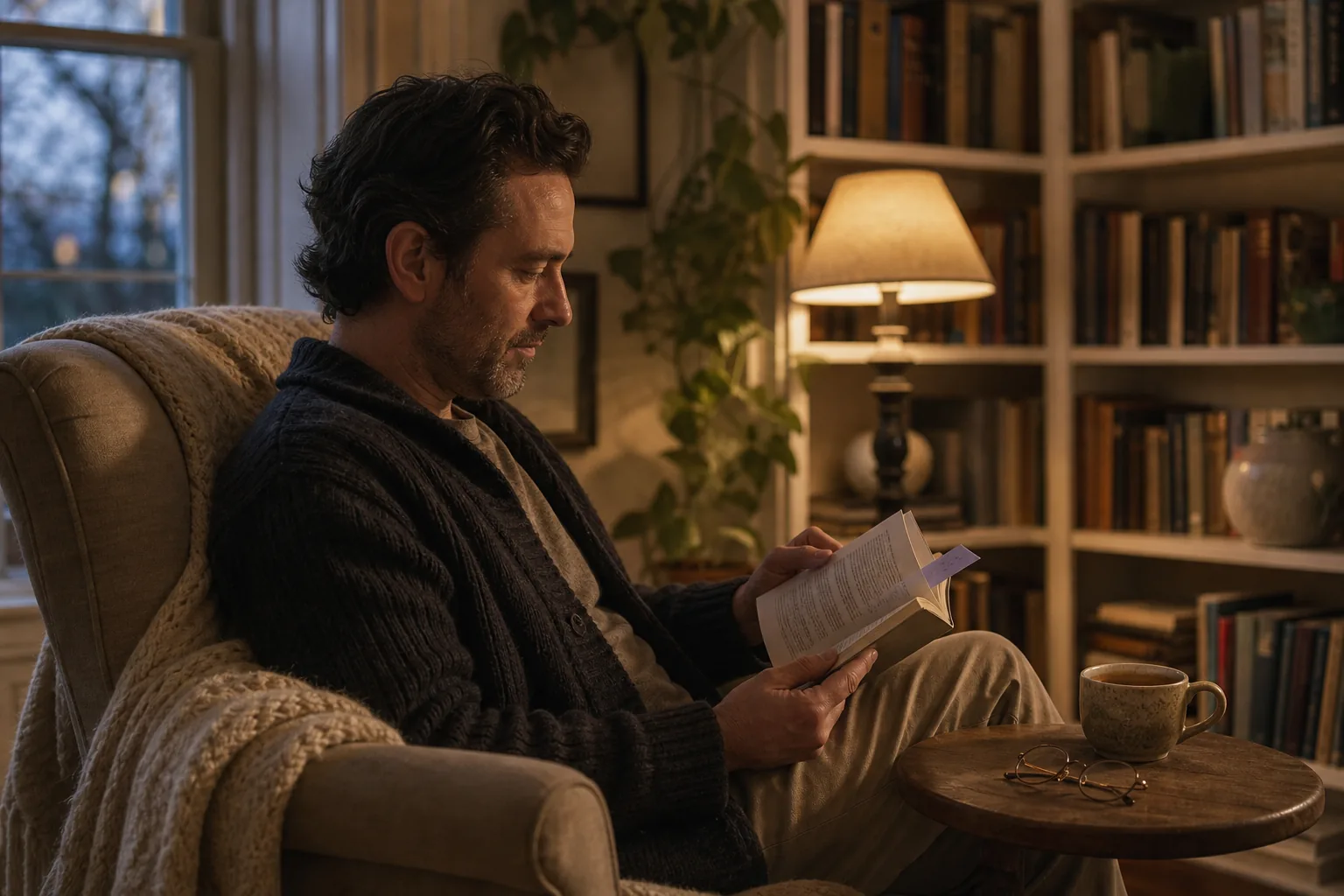
- reread one poem, essay, recipe, or page you already like;
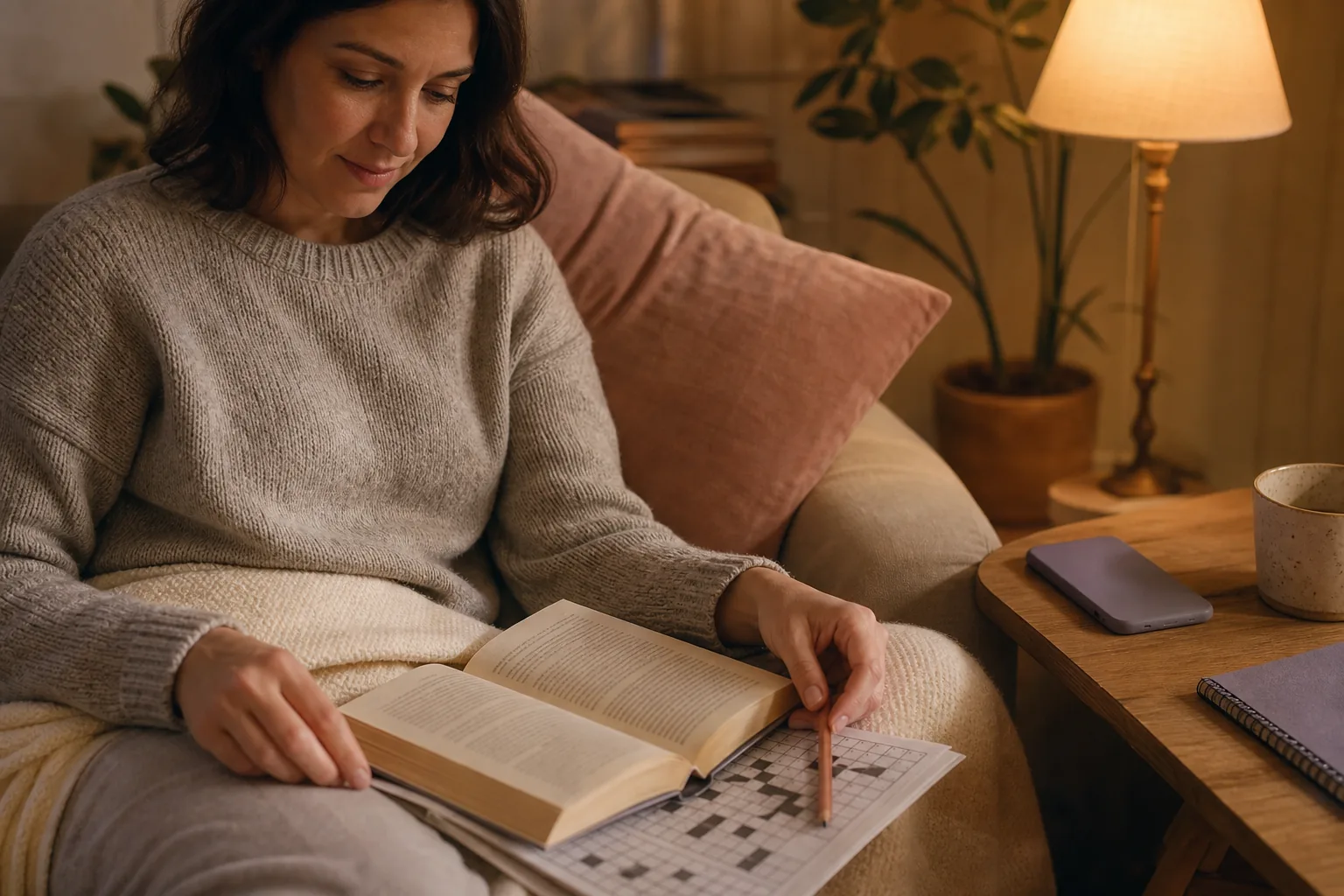
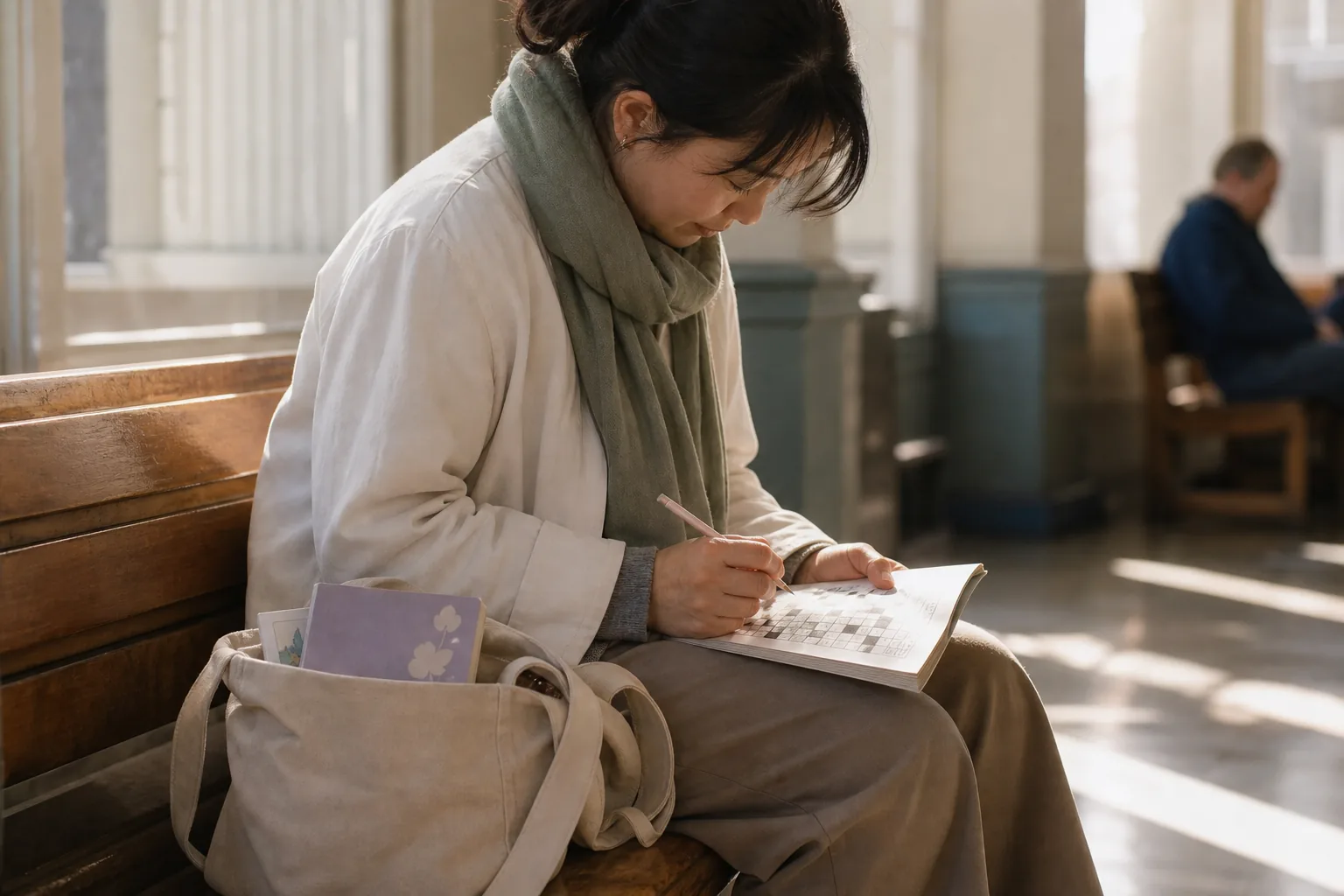
- do one paper puzzle and leave the rest for another day;
- look through postcards, stamps, pressed leaves, or another small collection;
- listen to one familiar album, radio program, or story after choosing it in advance;
- copy a sentence in handwriting you enjoy seeing;
- make the same small shape across a scrap of paper;
- sort a handful of buttons, ribbons, photographs, or paper pieces by color; or
- fold one ordinary sheet of paper into a shape, envelope, or tiny note.
These are invitations, not a checklist. One is enough. A familiar activity may feel more welcoming than a new hobby because you do not have to spend the first ten minutes learning what the first ten minutes are supposed to look like.
Choose something easy to pause
Some activities have natural stopping places. A page ends. A row ends. A small stack has been sorted. A song reaches its last note. Those edges can make a quiet hobby easier to return to because stopping does not feel like failing.
Before beginning, ask:
- Can I start this in about a minute?
- Can I stop without wasting materials or losing my place?
- Can I leave a clear point of return?
- Does the activity fit the room I am in?
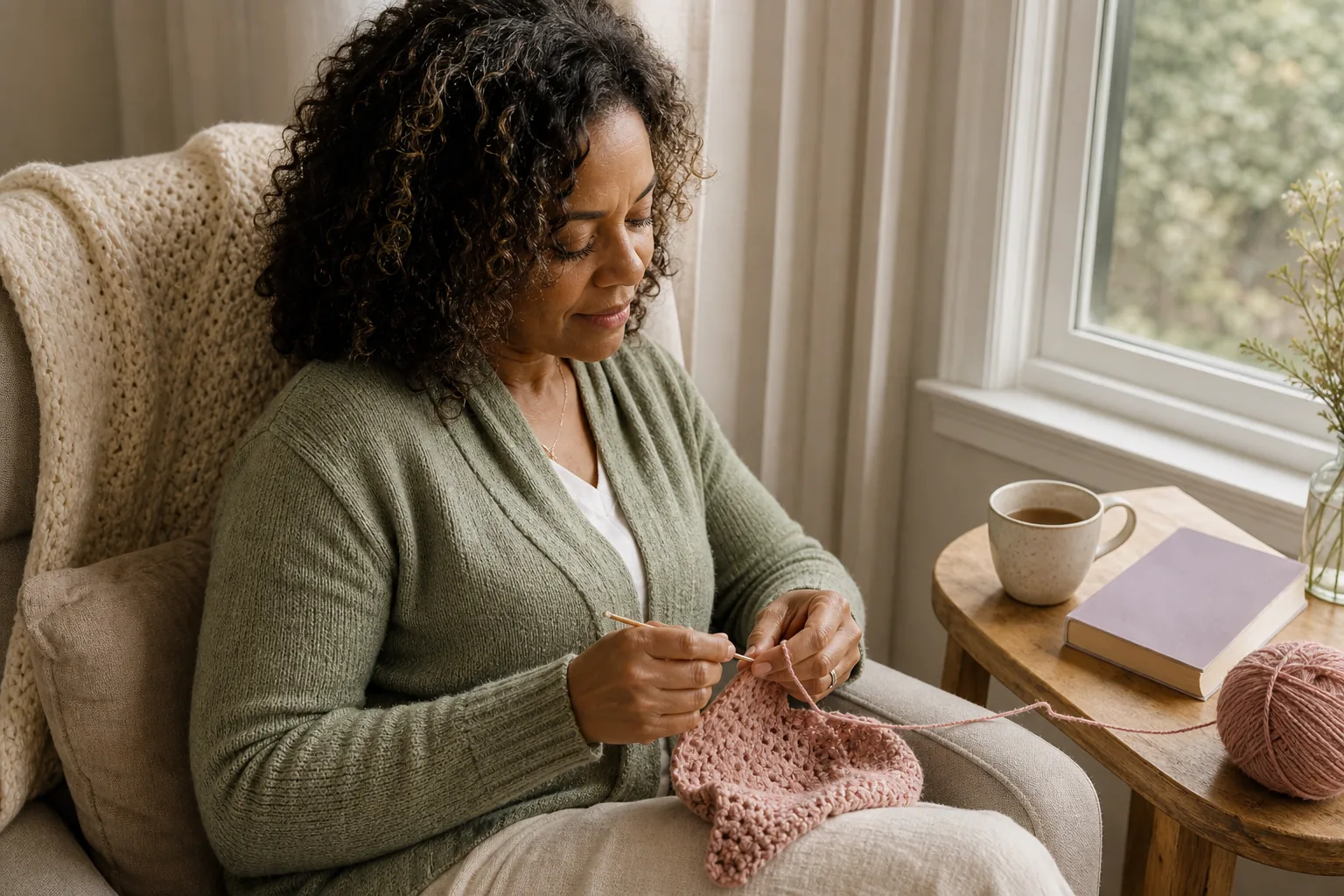
If the answer to all four is yes, the activity may be a good fit for today. If not, you can make it smaller. Read one page instead of a chapter. Sort ten pieces instead of the whole box. Add five stitches instead of promising yourself a finished object.
The soft turn of a page or the quiet repetition of one small motion can be the whole experience. Nothing has to be completed for the time to count.
Try a quiet creative choice with clear edges
“Make something” can feel enormous. “Fill this one square with blue lines” has edges.
For a quiet creative pause, choose a boundary before choosing a big idea. Use one piece of paper. Work with one color. Draw only circles. Make a collage no larger than a postcard. Write a six-word scene. Copy the shape of a leaf without trying to make it realistic.
The boundary is not there to judge the result. It gives your hands somewhere specific to begin. You may keep what you make, give it away, recycle it, or let it remain unfinished. A page can simply be the place where your pencil moved for a while.
If you want a more open creative pathway on another day, the Diamond Artist guide offers a separate route into color and making. Today can stay small.
What if reading feels like too much?
Reading is often included in lists of quiet hobbies, but it is not automatically the quietest choice for every person or every day. A dense chapter, unfamiliar names, or a story that takes time to enter may ask for more attention than you want to give.
You might choose a form with a smaller doorway:
- a comic or illustrated book;
- a familiar story;
- one short poem;
- a field guide with pictures;
- a cookbook you enjoy browsing;
- a letter you have kept; or
- a few pages from a book that does not require you to remember an elaborate plot.
You may also choose something that is not reading at all. Looking closely at one photograph, arranging a small collection, or listening to an already selected story can offer a quiet moment without asking you to follow lines of text.
If you miss books and want help finding an easy point of return, How to Start Reading Again stays with that question.
What can I do while sitting or lying down?
Choose an activity that does not require you to keep getting up for missing pieces. A short book, a familiar audio selection, a page for loose marks, or a small hand activity may work while seated. If you are lying down and holding an object does not appeal, listening, looking out a window, or simply resting can be enough.
The important part is not the posture. It is whether the activity respects the amount of effort you want to offer.
You do not need to force an option because it looked comforting when someone else described it. What feels pleasant to one person may feel busy, scratchy, bright, repetitive, or simply boring to another. Personal preference wins.
Let familiar choices stay familiar
A quiet hobby does not need extra atmosphere. You do not need a scent, a special soundtrack, a beautiful tray, or a newly arranged corner before you begin. If silence feels best, let the room stay silent. If a familiar voice or low music makes the activity more inviting, that can belong too.
Notice what the activity asks from your surroundings:
- How much light does it need?
- Does it create sound?
- Does it require a texture you may not want today?
- Will it spread beyond the space available?
- Can it be put away quickly?
This is not a search for the universally correct setup. It is a way to notice fit. Anything irritating or unexpectedly demanding is allowed to leave the plan, even if it is popular, attractive, or already purchased.
How do I choose without making another project?
Try choosing by subtraction.
Set aside any activity that needs instructions, shopping, extensive cleanup, or a decision you do not want to make. From what remains, notice which option has the kindest first step. Perhaps the book is already open. Perhaps the paper is within reach. Perhaps the collection is sitting in a small box that takes ten seconds to open.
Then ask only for the beginning. You do not need a schedule, a streak, or a new identity as Someone Who Does Quiet Hobbies. You are choosing one way to spend this particular pocket of time.
For more general alternatives to a familiar phone reach, explore small things to do instead of scrolling. The Screen-Free Self-Care Starter Bag guide can help if you want one visible home for an offline activity without building a complicated system.
Make a Gentle Soul doorway
A Gentle Soul version of an Analog Bag does not need to hold a full hobby shelf. It can make one quiet option easier to find.
Choose an activity you already understand. Give it a clear stopping place. Keep it somewhere you can reach without rearranging the room. If it asks for extra pieces, gather only what that one activity needs. If any part of it feels irritating or demanding, remove that part without trying to make it work.
The Gentle Soul Bag guide covers the separate question of how a bag and its supporting pieces can reflect preferences around light, sound, texture, and comfort. If that quiet option needs to travel, the Analog Travel Reset Kit guide keeps packing and transit considerations separate from the hobby choice. If you are unsure which Analog Bags pathway sounds like you, the Analog Self quiz offers a place to explore.
A small next step
Choose the quiet option that asks less of you than the others. Place it within reach, then let yourself use it for five minutes or not at all.
The invitation will still be there when you want it.