A notebook does not have to be a diary
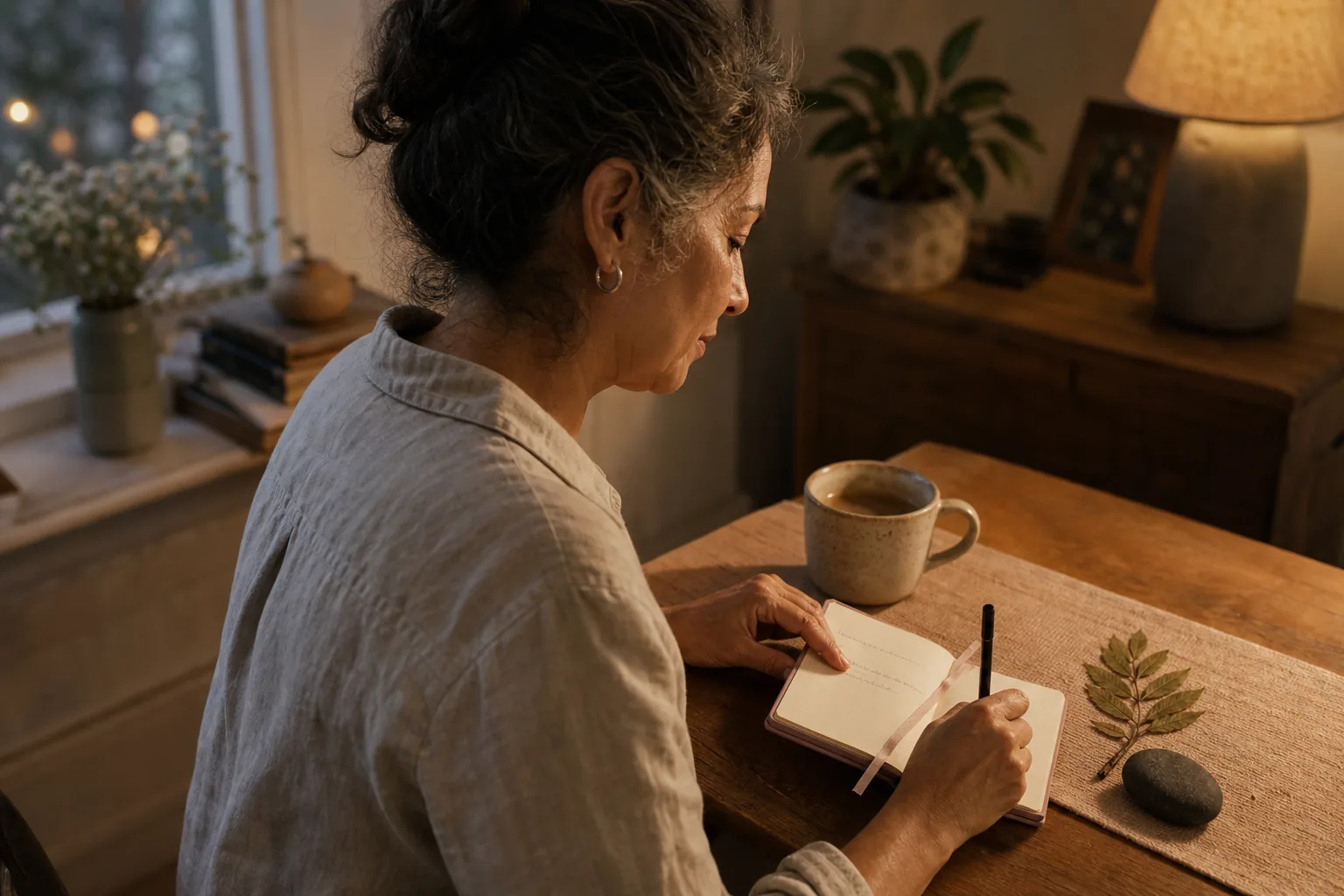
There it is: a beautiful blank notebook with a clean spine, an uncreased cover, and pages that seem to be waiting for something important. Perhaps you have owned it for months. Perhaps you have moved it from one shelf to another while continuing to write grocery lists on the backs of envelopes.
The first page can be ordinary.
If you do not feel like journaling, you can still use a notebook for lists, rough decisions, unsent letters, questions, observations, and temporary thoughts. It does not have to contain a daily account of your life. It does not have to reveal anything private. It does not even have to make sense to anyone but you.
A notebook can simply be a place where ink holds something still for a moment.
What can I write if I do not want to journal?
You might begin with a page that has a clear job. A clear job makes the blank space smaller. Instead of asking, “What should I say about my life?” you can ask, “What does this page need to hold?”
The answer may be practical, playful, unfinished, or wonderfully dull. All of those pages count.
The ordinary list
Write down what is already moving through your mind. It might be:
- meals you would happily eat again;
- people you mean to call;
- small repairs you have noticed;
- books you want to remember;
- errands that belong in the same part of town;
- questions to ask at an upcoming appointment; or
- things that would make tomorrow morning easier.
The list does not need a decorative heading or a complete system. Cross something out. Add an arrow. Write one item sideways if you run out of room. A useful page is allowed to look used.
If an item becomes a real next action, you can move it to your calendar or task list later. The notebook does not have to become the place where every responsibility lives.
The rough decision page
Some decisions become harder when every possibility stays in your head at once. A rough decision page gives each option a little space.
Write the decision at the top. Under it, make three small sections:
- What I know
- What I do not know yet
- What matters to me here
You are not asking the notebook to decide for you. You are letting the page show you what is present, what is missing, and what may deserve another conversation.
For a very small decision, two columns may be enough: “yes, because” and “no, because.” If the same reason appears on both sides, circle it. That repeated reason may be the part you want to look at more closely.
The unsent letter
An unsent letter can give a sentence somewhere to go without making it a message that another person must receive.
You might write to:
- someone you miss;
- someone you are not ready to contact;
- a place you once lived;
- a version of yourself from an earlier season;
- an object you are deciding whether to keep; or
- tomorrow morning.
The letter can be three lines long. It can begin with “I keep thinking about” or “Here is what I wish I could say plainly.” You may stop before reaching a conclusion.
An unsent letter is not a rehearsal you are required to send. It is a page. You decide what happens to it next.
The pocket observation page
When you want to write without writing about yourself, notice what is around you.
Record five things you can see from one chair. Describe the sound of a room without naming its source. Write down a sentence you overheard, leaving out names and identifying details. Notice the shape of a shadow, the color at the edge of a cloud, or the small scrape on a table that looks a little like a coastline.
Observation gives the pen something specific to follow. The page becomes a collection of details, not a report about your feelings.
You can keep it very small:
- one color;
- one sound;
- one texture;
- one movement; and
- one thing you had not noticed before.
That is a complete page, even if it occupies only six lines.
The page for questions
Not every question needs an immediate answer. Some questions become more useful when they are allowed to remain questions for a while.
Try a page that begins:
- What am I curious about?
- What would I like to understand before I choose?
- What am I assuming?
- What would make this feel simpler?
- Whose perspective have I not heard?
- What can wait?
You can leave space beneath each question, return later, or never answer it. The purpose is not to interrogate yourself. It is to give curiosity a quieter shape than another row of open search tabs.
The temporary page
Some thoughts need a surface, not an archive.
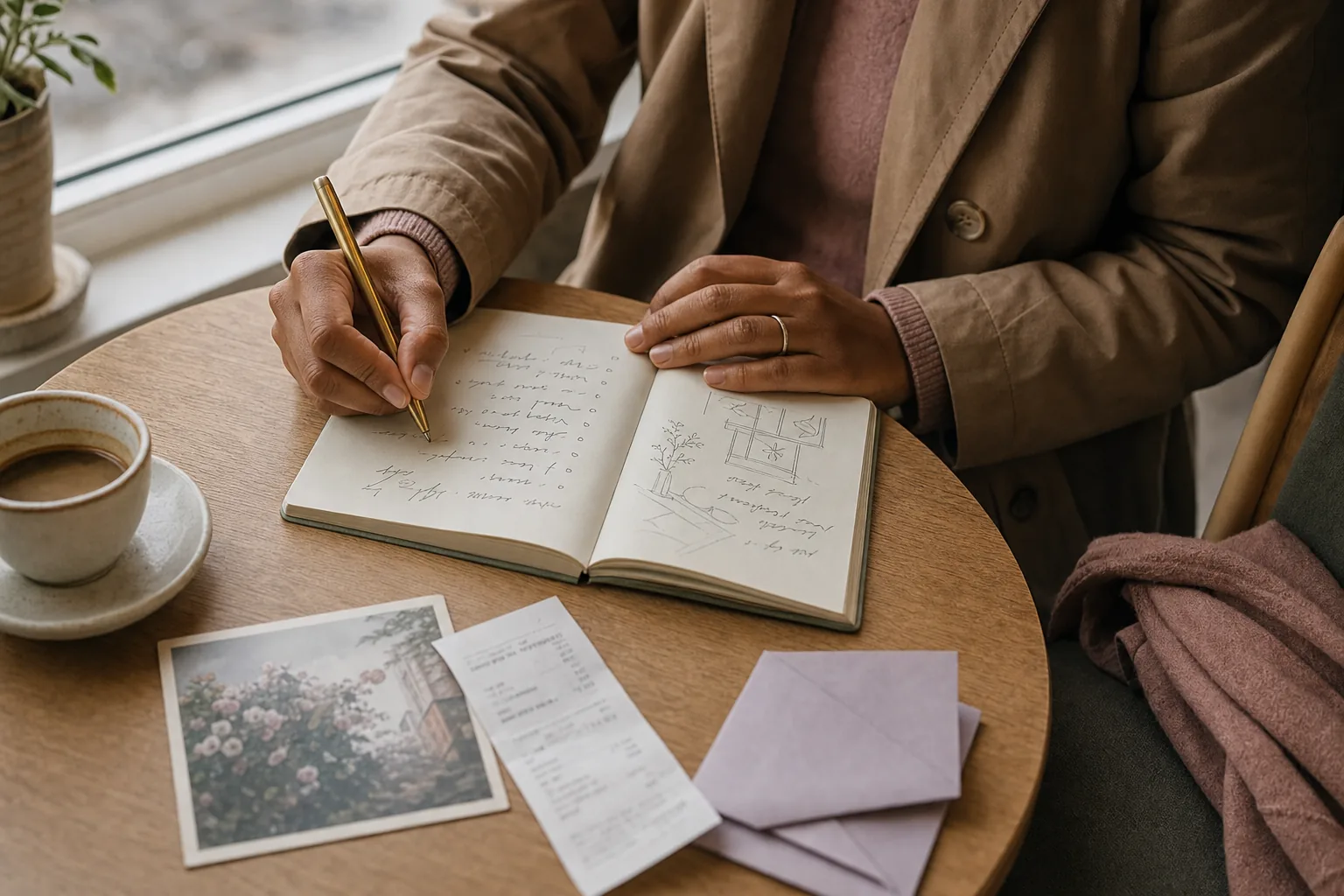
Use a page for quick arithmetic, a packing sketch, a practice signature, a phone-call outline, a rough floor plan, or the order in which three errands make sense. Scribble. Make boxes. Tear the page out when it has finished its job.
Not every thought deserves a permanent place in your personal history. A notebook can contain working pages, and working pages are allowed to disappear.
Can one notebook hold everything?
Yes, if that feels easy. Your grocery list can sit beside a line from a book. A rough plan can face a tiny drawing. An unsent letter can be followed by measurements for a shelf.
You do not have to assign a separate notebook to every part of your life. You also do not have to keep everything together. Some people enjoy one ongoing book because there is only one place to reach. Others prefer a small notebook for temporary pages and another for words they want to keep.
The useful arrangement is the one you will actually open. If a color-coded notebook system starts to require its own instruction manual, you have permission to use the nearest page.
An index can help without becoming a project. Leave two pages blank at the front, number pages only when you want to find them again, and add a short label such as “travel notes, 14” or “books, 27.” Pages that do not need to be found again do not need an index entry.
Does writing have to be personal?
No. Writing by hand can be practical, imaginative, observational, social, or entirely impersonal.
You could copy a recipe into words you will understand while cooking. You could make a tiny glossary for a subject you are learning. You could describe an object without naming it, draft questions for a conversation, collect possible names for a houseplant, or write a list called “Things that are better in a bowl.”
The notebook does not need access to your deepest thoughts to earn its place. It can hold the surface of your day. It can hold facts, fragments, shapes, plans, and peculiar little categories.
If you want a bridge from paper into a broader offline moment, Things to Do Instead of Scrolling offers other small choices that do not require a formal habit.
What should I do with private pages?
Before writing something private, consider where the notebook lives and who can access it. You might keep personal pages in a separate place, use initials instead of full names, or write only the part you are comfortable preserving.
You may also:
- fold a page inward;
- remove and destroy it when you are finished;
- cover identifying details;
- write a brief summary instead of the full story; or
- choose not to write the private part at all.
A paper page does not come with automatic privacy. Your comfort and the privacy of other people matter more than completing the exercise.
If a page includes someone else, leave out details that are not yours to preserve. The notebook can hold your own question or observation without becoming a record of another person’s private life.
How do I begin a beautiful blank notebook?
Begin somewhere other than the first page if the first page feels ceremonial. Open to page three. Write the date only if dates help. Put “ordinary things” at the top and list five objects within reach.
You could also make the first mark deliberately unimportant:
- Test the pen in one corner.
- Write the name of the day.
- Draw a box around a word you like.
- Add one thing you do not want to forget.
Now the notebook is no longer waiting to become perfect. It has begun.
There is something pleasing about a pen moving across paper, physically and deliberately. The faint drag of the tip, the pressure of your hand, and the growing patch of ink make the page tangible. You do not have to turn that feeling into a daily practice. You can simply use it when it feels useful.
How do I stop without creating a journaling habit?
Stop when the page has done its job.
You do not need a closing reflection, a streak, or a promise to return tomorrow. Put a small dot at the end. Draw a line beneath the last sentence. Close the cover while the thought is still imperfect.
If you want to return, leave yourself a visible doorway. A bookmark, a folded corner, or one unfinished question can show you where to begin next time. If you do not return for three weeks, the notebook has not failed. It will still be there.
The Paper & Pen Purist guide keeps recommendations for the writing-centered Analog Bag separate from this article. If your writing begins to feel more reflective or symbolic, the Mindful Mystic guide offers another pathway, and How to Create a Personal Ritual shows how one question and one familiar object can shape a brief pause.
A gentle next step
Open the notebook you have been saving. On any page, write one useful, imperfect thing: a list of three, a rough decision, an observation, or a question you want to keep.
Then close it. One honest page is enough.
If paper is one of several directions you are considering, the Analog Self quiz can point you toward a starting pathway.